
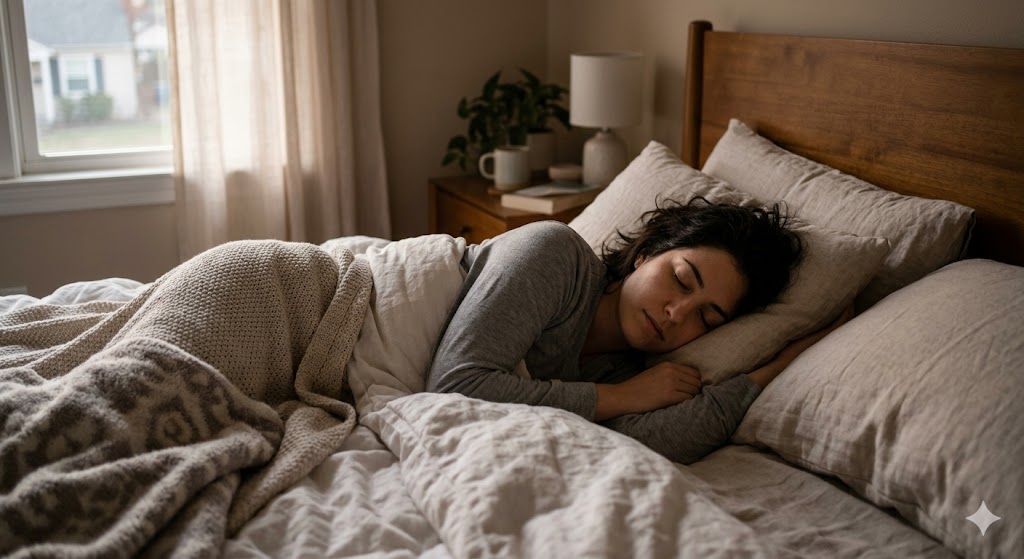
The Basics of Sleep Apnea
Sleep apnea is a condition that causes frequent waking during the night due to interrupted airflow. It occurs when breathing stops for 10 or more seconds at a time — episodes called “apneas” that can happen hundreds of times in a single night. When breathing pauses, the brain sends signals that briefly wake the body, preventing the deeper, more beneficial stages of sleep.
Request an AppointmentWhy Sleep Apnea Leaves You Feeling Depleted
This disruption leads to sleep debt — when the body and brain can’t complete a full sleep cycle each night, you’ll feel it more with each passing day. Beyond sleep loss itself, this chronic issue can lead to daytime fatigue, memory problems, moodiness and irritability, and more, and it can also trigger issues that impact your cardiovascular and respiratory systems. See our page on the dangers of sleep apnea for a closer look at the long-term risks.
Types and Causes
Sleep apnea generally falls into two categories: obstructive sleep apnea, caused by a physical blockage in the airway, and central sleep apnea, linked to how the brain signals the muscles that control breathing. Learn more on our page about what causes sleep apnea, or review our list of common sleep apnea symptoms to see what to watch for.
Frequently Asked Questions About the Basics of Sleep Apnea
What exactly happens during a sleep apnea episode?
Breathing pauses for 10 seconds or longer, prompting the brain to briefly wake the body to resume normal breathing — sometimes hundreds of times in one night.
Why does sleep apnea leave me feeling tired even after a full night’s sleep?
Because these interruptions prevent the body from completing full, restorative sleep cycles, leading to a buildup of sleep debt over time.
Is sleep apnea the same as just snoring?
No, snoring is only one possible symptom of sleep apnea. Learn more on our page about whether snoring means sleep apnea.
What are the main types of sleep apnea?
The two main types are obstructive sleep apnea, caused by a physical airway blockage, and central sleep apnea, linked to breathing signals from the brain. Obstructive sleep apnea is far more common.
Can sleep apnea affect my long-term health?
Yes, untreated sleep apnea has been linked to increased risk of heart disease, high blood pressure, and other serious conditions over time.
How do I find out if I have sleep apnea?
The only definitive way is a sleep study. Call (386) 253-0115 or request an appointment online to learn more about diagnosis at our Daytona Beach, FL office.